
[International] PLA Activates Overseas Base in Laos; Analyst: Part of China's Version of Indo-Pacific Strategy
RtiTalk 小編19d ago
Regarding the recent activation of the Kunming Airport 'Joint Logistics and Training Center' by the Chinese Communist Party's People's Liberation Army in Laos, scholar Su Tzu-yun analyzed that the airport is part of China's version of the 'Indo-Pacific Strategy.' Its purpose is to project military power into the Indian Ocean, stabilize the sea lanes from the South China Sea to the Indian Ocean, and combined with China's railway construction in the Indochinese Peninsula, it reveals Beijing's profound strategic intentions.
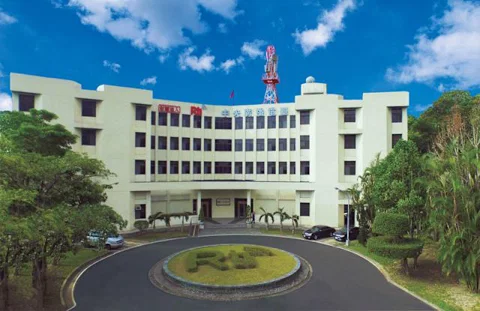
China's Ministry of National Defense announced that the 'Joint Logistics and Training Center' and the 'China-Laos Friendship Aviation Academy,' jointly established by the PLA and the Lao military at Kunming Airport, were officially inaugurated on September 29. The PLA claimed that this airport is used to help Laos strengthen the training of its air force pilots and is jointly maintained by both parties.
Su Tzu-yun, Director of the Institute of Defense Strategy and Resources at the National Defense Security Research Institute, told CNA that this is part of China's complex geopolitical strategy. Through the 'Belt and Road Initiative,' China has been pre-positioning overseas naval and air force bases, including the already established bases in Djibouti and Ream, Cambodia. These are primarily naval bases aimed at securing Indian Ocean sea lanes and reducing risks in the Strait of Malacca.
He stated that with the activation of Laos' Kunming Airport, Chinese fighter jets can be deployed there in the future, covering the South China Sea, the Indian Ocean, and the Strait of Malacca, thereby stabilizing the sea lanes from the South China Sea to the Indian Ocean.
Su Tzu-yun emphasized that the most crucial aspect of Kunming Airport is its ability to 'project air power westward.' If the CCP obtains a joint logistics and training base now, and if there are incidents in the Indian Ocean in the future, the Chinese air force can legitimately station troops in Laos and project power westward, greatly extending the PLA's operational range.
Media reports indicate that Kunming Airport is located 45 kilometers northwest of Vientiane, the capital of Laos, with a runway length of approximately 2000 meters. Su Tzu-yun pointed out that the current conditions are sufficient for fighter jets to take off and land. If the CCP further cooperates with Laos in the future, the runway might be extended to 3000 meters, allowing large Chinese bombers, transport aircraft, and refueling tankers to operate.
He further added that heavy fighter jets like the PLA's J-16 could also be deployed, with a combat radius of 1600 kilometers, capable of covering the Strait of Malacca. With the presence of refueling tankers, 'it can basically reach the waters near southern India and southern Iran.'
Su Tzu-yun noted that Kunming Airport not only makes neighboring countries like Vietnam wary but also potentially affects US military strategic deployments. He pointed out that the US has a base on Diego Garcia in the Indian Ocean, and 'now with the emergence of a red air force presence in the Indochinese Peninsula, it poses a threat to this base.'
He also added that secondly, if there are incidents in the South China Sea or the Taiwan Strait, US air force units coming from the Indian Ocean might have to cross the Indochinese Peninsula, flying from west to east, and could be intercepted by China.
In addition, Su Tzu-yun mentioned Beijing's deeper strategic deployment. Besides naval and air power, the CCP is accelerating its railway strategy in the Indochinese Peninsula, including the China-Myanmar Railway and the China-Laos Railway. The former connects Yunnan, China, directly to an outlet in the Indian Ocean, and the latter, when extended to Phnom Penh, Cambodia, will provide another port.
He stated that all of this is part of Beijing's overall national strategy, aimed at securing China's maritime transport and access to the sea, protected by naval and air power. If the Strait of Malacca is blockaded, crude oil and natural gas can still be transported to China from Myanmar.
Su Tzu-yun concluded that this is China's version of the 'Two Oceans Indo-Pacific Strategy,' connecting the Pacific and Indian Oceans via land railways to ensure Beijing's 'sense of security.'
Further Reading
Beijing Establishes First Overseas Air Force Facility in Laos; Analyst: Expanding China's Overseas Military Layout
China Activates Laos Overseas Base, Deepening Influence in Southeast Asia
Source Link: https://www.rti.org.tw/news?uid=3&pid=235583
How does this article make you feel?
0 people reacted