
Editor's Pick
Sisterhood Publishes "No Cloth on the Island" Discussing Intergenerational Struggles in Immigrant Families; New Immigrants Read to Tears
K
KYLE14d ago
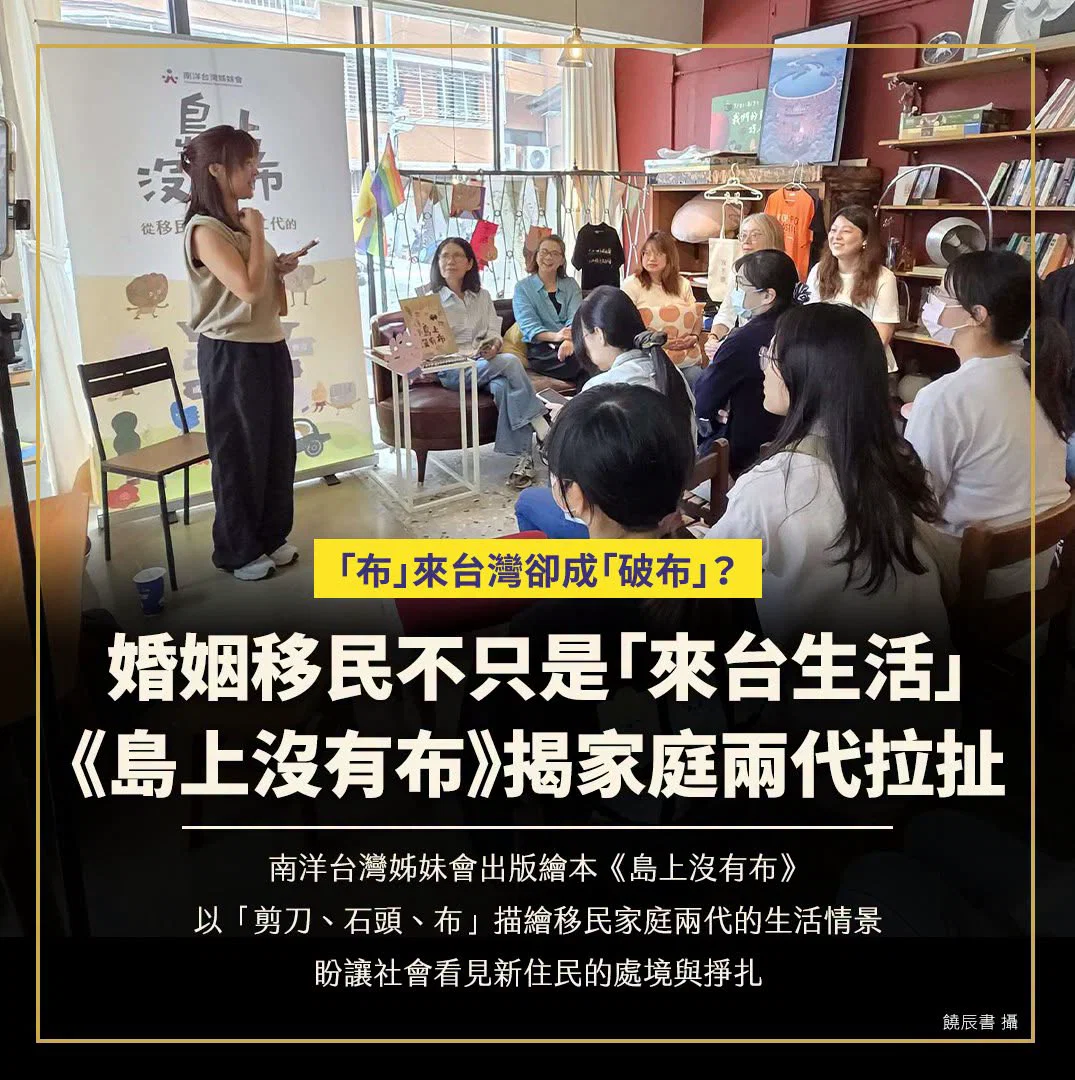
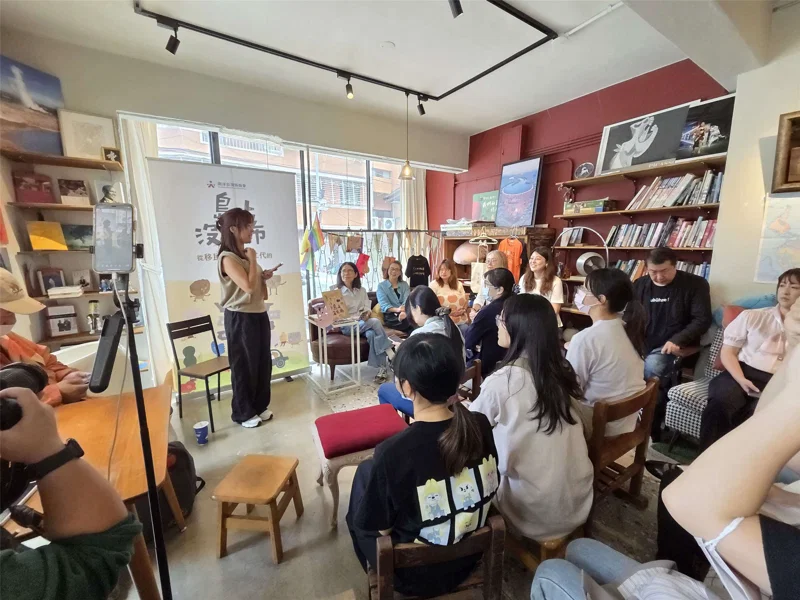
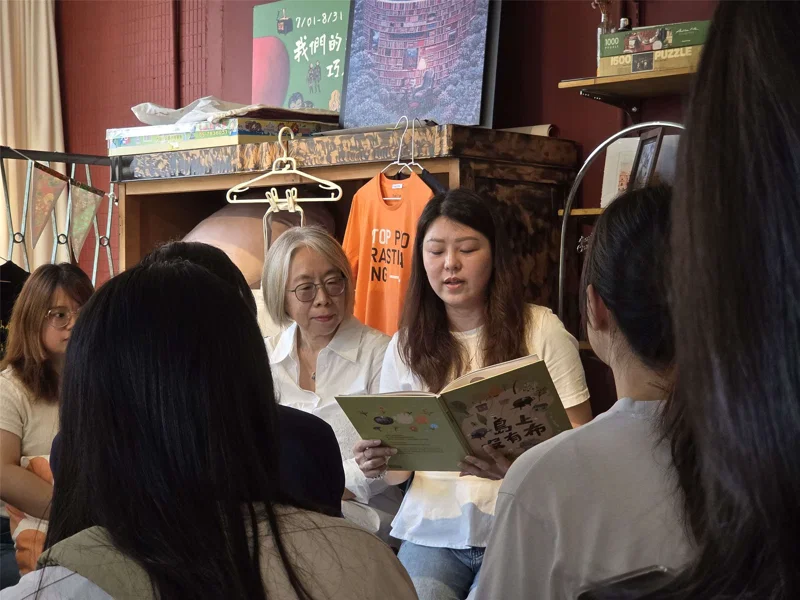
The Nanyang Taiwan Sisterhood today (8th) published its first picture book, "No Cloth on the Island," and held a "New Book Launch" at the second-hand bookstore Book Bar in Wenshan District, Taipei City. They invited people from various fields to share their feelings after reading the picture book, drawing from their own experiences. The picture book depicts the life situations of marriage immigrant sisters and their second-generation children in Taiwan, moving many to tears and hoping to make Taiwanese society see the struggles behind their daily lives.
The Nanyang Taiwan Sisterhood is Taiwan's first national non-governmental organization independently established by Southeast Asian new immigrant women. They recently published their first picture book, "No Cloth on the Island." The story uses "rock, paper, scissors" as its main characters, telling the story of "Cloth," an immigrant who traveled across the ocean to Taiwan, formed a family with a Taiwanese person, and gave birth to "Scissors," a second-generation immigrant. It explores what Taiwan would become if one day there was "no cloth on the island."
Chen Xuehui, Secretary-General of the Nanyang Taiwan Sisterhood, said: "(Original sound) Immigrant families now have second generations, and there are also original Taiwanese people. The main goal is to let Taiwanese society see the lives of immigrant families in Taiwan, how they coexist harmoniously with society and move forward together. At the same time, it also makes society more aware that immigrant families are an inseparable part of Taiwanese society, a community."
Chen Xuehui shared that when she saw "Cloth," representing marriage immigrants in the picture book, being hurt by "Scissors," the second-generation immigrant, and even becoming "torn cloth," she admitted that the conflicts and struggles between two generations within the family reflected the hardships of new immigrant sisters in Taiwan over the past 20-30 years, making her feel deeply. Compared to comics or novels, she said that "picture books" allow people to bring in their own life experiences, create more imagination, and can evoke completely different feelings with different readers and over time.
The new book launch invited promoters from culture, art, human rights, media, literature, and second-generation immigrants to share their thoughts on the book. (Photo by Rao Chenshu)
At the new book launch, the Nanyang Taiwan Sisterhood invited people from various fields to share their experiences after reading the picture book. Wang Lilan, co-founder of the "Returning Home Spicy" Southeast Asian Cultural Base, became choked up with emotion after speaking only a few words. She said that she had suffered a lot of hurt in her 25 years in Taiwan and often felt like the "torn cloth" in the picture book. However, she recently realized that she might have unconsciously overlooked cultural contextual differences, which were actually the "scissors" causing trauma to her friends and relatives.
Wang Lilan gave an example: in the past, she often said to her mother-in-law in Taiwanese, "As long as you're happy," because she thought "being able to happily do what you want" was a positive meaning. It was only recently that she was shocked to discover that in the Taiwanese context, this was actually a negative or even offensive phrase. "After 25 years, I realized I had to relearn many things."
Geng Yiwei, drama consultant at the National Kaohsiung Center for the Arts (Weiwuying), analyzed that these details rely on "face-to-face" feelings and are difficult to understand through reading text. "Picture books" can create a physical connection, helping the general public deeply understand new immigrant issues. As a "second-generation mainlander," he pointed out that Taiwan is inherently a society of immigrants, and the "resilience" and unique experiences developed over a long period of instability can provide a model for countries dealing with severe immigration problems.
Chen Xuehui added that "No Cloth on the Island" was created by 10 "old mothers" who immigrated to Taiwan through marriage, from countries including Vietnam, Indonesia, the Philippines, Myanmar, Cambodia, and Malaysia, all of which are major sources of marriage immigrants to Taiwan. They conceived the story from their own experiences and co-created it with illustrators, and it was officially published today.
How does this article make you feel?
0 people reacted