
[International] Vietnam Faces Structural Labor Shortages and Rising Wages; Taiwanese Businesses Break Through with Automation and Localized Management
RtiTalk 小編16h ago
The expansion of foreign investment and the shift in younger generations have led Vietnam to face a severe structural labor shortage. The increase in minimum wages has eroded the advantage of low costs, prompting businesses to accelerate the adoption of automated equipment and localized management strategies. Mature AI technology from Taiwan has become a strong support for Taiwanese businesses to overcome labor bottlenecks.
Hundreds and thousands of young Vietnamese workers toil with bowed heads in noisy, hot factories, a microcosm of Vietnam's tens of thousands of manufacturing plants.
With the expansion of foreign investment, Vietnam, as one of the biggest beneficiaries of the "China+1" global supply chain shift, requires a large labor force. However, its labor market is facing dual pressures of significant "structural shortages" and a "lack of skilled talent."
Wages Increased Over 70% in 11 Years, Making Recruitment Harder for Traditional Industries
According to the "Regional Minimum Wage" announced by the Vietnamese government, the minimum wage in first-tier cities like Hanoi and Ho Chi Minh City has risen from 3.1 million VND (approximately 3,910 NTD) in 2015 to 5.31 million VND (approximately 6,700 NTD) this year, a 71% increase over 11 years.
Vietnam, with its population of 100 million, does not simply lack enough people; rather, manufacturing recruitment is difficult in specific regions. In industrial hubs like Binh Duong, Dong Nai, Bac Ninh, and Bac Giang, the surge in factories for electronics, textiles, footwear, and automotive parts has led to severe regional competition for workers, with foreign investment expansion far outpacing local labor supply.
Even with various welfare measures such as employee referral bonuses, housing subsidies, and long-distance transportation allowances, it is common for companies to struggle to hire workers for weeks.
Simultaneously, the manufacturing and service sectors are engaged in a fierce competition for young, entry-level workers. Gen Z no longer prefers high-intensity, repetitive factory assembly lines. Instead, they are turning to platform economies like food delivery and ride-hailing apps, or careers with greater flexibility such as in the service industry or e-commerce startups.
Chang Ching-san, General Manager of YFY Vietnam, stated in an interview on the 14th after a demonstration of energy-saving robotic stacking technology, that the electronics industry has seen rapid investment growth in Northern Vietnam in recent years. Compared to the electronics industry, the working environment in traditional industries is less appealing to young people.
"This makes recruitment very difficult for us. Some new employees, upon finding the traditional factory environment to be hotter and the labor intensity higher, unlike the comfortable air-conditioned work in the electronics industry, choose to resign and move to the electronics sector, significantly increasing recruitment pressure."
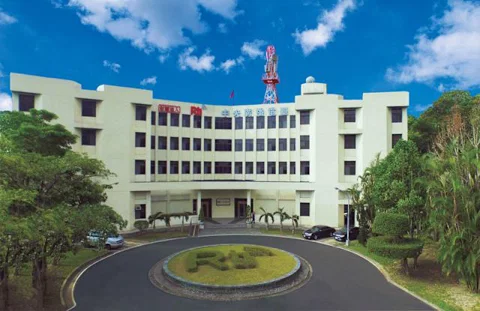
Facing rising wages and the impact of Gen Z labor shortages, Vietnam's manufacturing sector is accelerating its transformation towards smart automation. In this wave, Taiwan stands out with its advantages in AI, customization, and core technology. Pictured is YFY's Vietnam factory. (Photo: CNA)
Lin Hsuan-chieh, Vice President of the Vietnam Association of Taiwanese Chambers of Commerce, who is involved in factory construction, said that Vietnam is undergoing major construction, creating an estimated 20% labor gap, with demand everywhere. The monthly salary for mid-level technical personnel has nearly doubled from the past 10-20 million VND (12,000 to 25,000 NTD).
Shortage of Both Entry-Level and High-Level Talent Hinders Technological Transformation
In addition to entry-level labor, there is a more severe shortage of high-level technical personnel. Vietnam is vigorously promoting high-value-added industries such as semiconductors, AI, and electric vehicles.
However, the training speed for local engineers, automation maintenance technicians, and managers is far behind the pace of industrial expansion, creating a bottleneck for technological transformation. Local mid-to-high-level talent with cross-border supply chain management capabilities is extremely scarce, and heavy poaching among companies has become the norm.
Dương Nguyên Bình, Vice Chairman of the Vietnam Automation Association, pointed out that there is a significant lack of high-quality labor capable of absorbing technological knowledge, which is also a primary direction for Vietnam's current education and training industry.
What exacerbates the structural labor shortage is Vietnam's aging population structure, and the gradual disappearance of the low-cost demographic dividend. Minimum wages and overall labor costs have continued to rise in recent years, with increases exceeding GDP growth rates. "Low wages" are no longer the main selling point of Vietnamese manufacturing.
Low-Wage Advantage Gradually Fades; Taiwanese Businesses Accelerate Management Localization
The increase in Vietnamese wages recently became a hot topic among Chinese netizens, especially given China's high unemployment rate and foreign capital withdrawal in recent years, leading to unemployment for many mid-to-low-level technicians. Chinese media even reported that Chinese-funded factories in Vietnam were actively seeking Chinese technicians.
Taiwanese businesses state that due to factors like complicated work permit applications, it is unlikely for Chinese assembly line workers to enter Vietnam. However, in terms of management, many companies adopt a configuration of Vietnamese at the entry-level, Chinese in the middle, and local nationals at the high-level.
Lin Hsuan-chieh admitted that companies initially tend to use Chinese cadres, but over time, they gradually switch to Vietnamese local cadres for localization, reducing the cumbersome procedures for visas, accommodation, and work permits. Currently, dispatched cadres account for only a certain proportion and will gradually decrease in the future.
Management localization is also YFY's goal. Chang Ching-san stated that companies usually consider hiring foreign employees only for positions requiring higher technical skills, "but we still hope to achieve management localization as much as possible."
YFY continues to train local Vietnamese cadres. Having been deeply rooted in Vietnam for 22 years, the company now has many high-level talents at the manager and deputy manager levels among its local staff, continuously progressing towards the goal of full factory localization.
Rising Labor Costs; Taiwanese AI Automation Becomes a Boon for Taiwanese Businesses
Vietnam remains competitive overall. Facing rising labor costs and the strategy of prioritizing local employees, "production automation" is an upgrade goal for many companies, including Taiwanese businesses.
Chang Ching-san pointed out that even if automated equipment cannot completely replace human labor, it can at least reduce labor intensity, make work easier for employees, and better retain talent in their original positions. Furthermore, Taiwanese automated equipment is entering Vietnam, and YFY recently switched some equipment from Japanese to Taiwanese manufacturing.
Lin Hsuan-chieh said that Vietnam's labor costs are increasing. The biggest advantage of automation is its ability to solve problems related to worker fatigue and high overtime pay, while also avoiding working hour restrictions and allowing for adjustments in production speed to meet variable international order deadlines. Additionally, it can replace jobs involving high labor intensity, high temperatures, or chemical hazards.
He believes that Taiwan began developing robotic arms in the 1980s. After decades of technological accumulation and evolution, combined with the latest AI applications, its technical level and maturity are difficult to replace and will be a strong support for Taiwanese investments operating abroad.
Vietnam's Gen Z is shifting towards more flexible service and electronics industries, leading to a severe shortage of labor for repetitive, high-demand traditional industry assembly lines. YFY Vietnam's cardboard stacking operations have been automated by Taiwanese intelligent robotic arms. (Photo: CNA)
Source Link: https://www.rti.org.tw/news?uid=3&pid=239090
How does this article make you feel?
0 people reacted