
Editor's PickLife Guide
Don't Be Fooled! What to Do When You Encounter Suspicious Messages While Living in Taiwan?
G
Gina55d ago
When living, studying, or working in Taiwan, in addition to adapting to a new environment, you should also be aware of various scam messages.
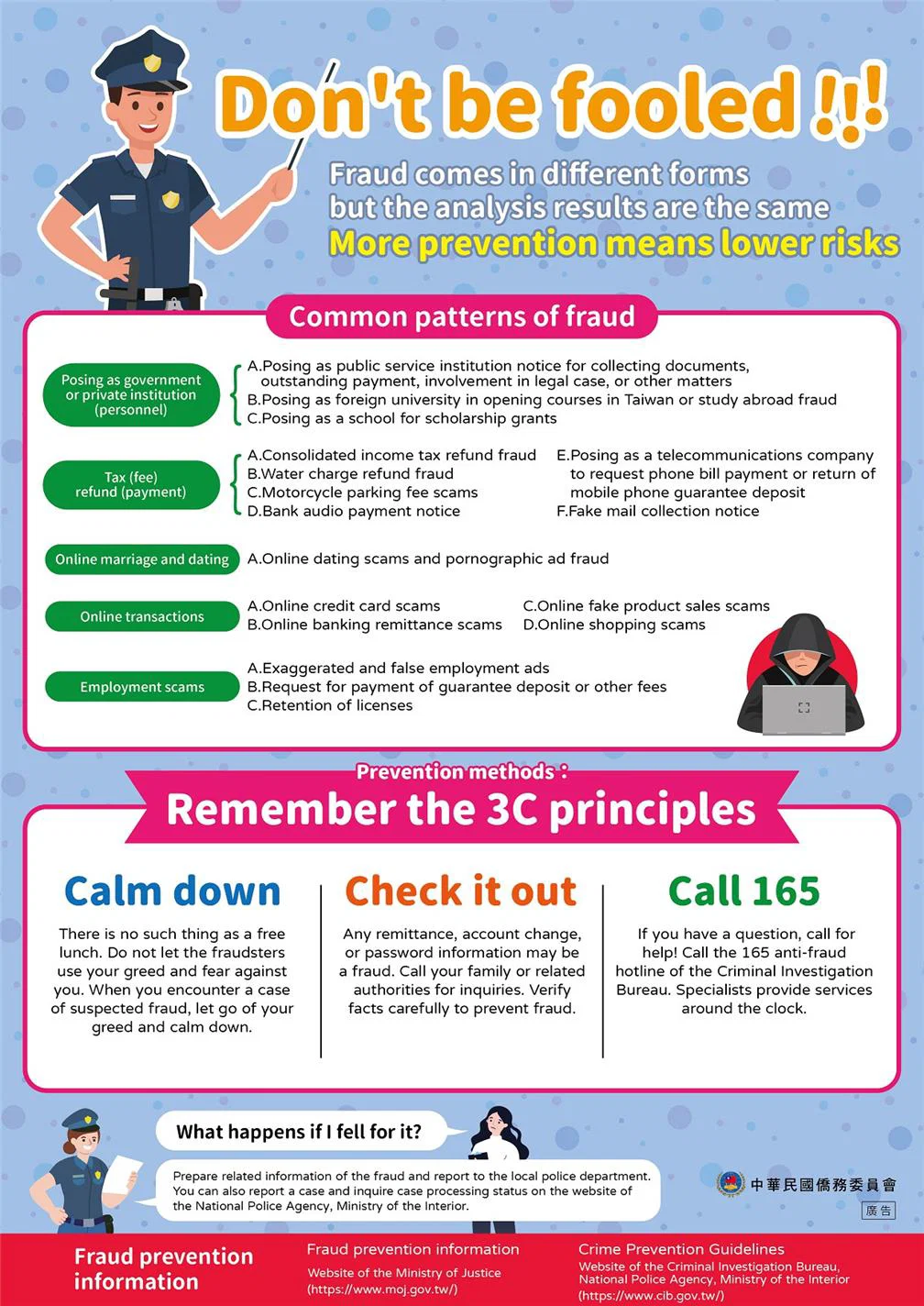
Some scams may impersonate government agencies, schools, banks, telecommunication companies, logistics companies, or use reasons such as "account abnormality," "package not yet claimed," "winning notification," "refund subsidy," "job opportunities," "investment and financial management," etc., to ask you to click on links, provide personal information, transfer money, or join unfamiliar groups.
When encountering suspicious messages, remember the "3C Principle":
Calm down: Stay calm.
Don't immediately transfer money, provide information, or click on links just because the other party is urging you.
Check it out: Verify carefully.
When receiving suspicious phone calls, text messages, emails, or social media messages, first confirm the source. Do not directly enter account numbers, passwords, resident ID numbers, passport details, or bank information into unknown links.
Call 165: If in doubt, call 165.
If you are unsure whether it is a scam, you can call the 165 anti-scam hotline for inquiries, or confirm with your school's international office, teachers, or trusted friends.
The Overseas Community Affairs Council, Republic of China (Taiwan) has produced anti-scam reminder posters for overseas students and friends living in Taiwan. You are also welcome to share them with those who have just arrived in Taiwan and are not yet familiar with scam tactics.

How does this article make you feel?
1 people reacted