
Editor's PickLife Guide
🗣️ #MeToo Movement 9th Anniversary: From Hollywood's Voice to Taiwan's Awakening, Those Scars That Cannot Be 'Let Go'


在台的順1d agoEdited
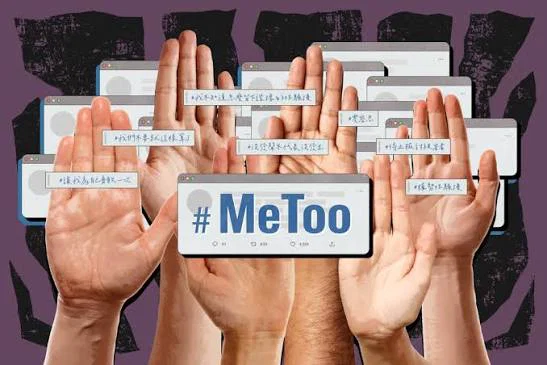
Since The New York Times exposed the sexual scandals of Hollywood golden producer Harvey Weinstein in October 2017, the #MeToo movement has swept the globe for nine years. In fact, the slogan can be traced back to 2006 when African-American activist Tarana Burke coined it to call for empathy among vulnerable women. However, it was not until actress Alyssa Milano's voice on Twitter that it truly transformed into a global human rights movement that transcended borders and broke down barriers in the entertainment, political, economic, and educational sectors.
🔥 Taiwan's Delayed Yet Fierce #MeToo Wave
In May 2023, Taiwan's #MeToo movement ignited in the political arena and then rapidly spread like wildfire to academia, sports, business, and the arts. This belated storm completely tore away the hypocritical veil of Taiwan's society, which had long prioritized "the bigger picture" and "keeping the peace."
Many people wept while watching the news, realizing that so many victims around them had experienced the same fear. This wave of the movement revealed that sexual harassment and violence hidden within power structures had long been deeply rooted in the social system.
⚖️ Systemic Failure and Reconstruction: The Three Gender Equality Laws Undergo Major Revision
Looking back at Taiwan's nearly 20 years of implementation of the "Gender Equality Education Act," the "Gender Equality in Employment Act," and the "Act for Prevention of Sexual Harassment" (collectively known as the Three Gender Equality Laws), the data cruelly shows the system's failure:
Low Cost of Violation: The average fine for perpetrators of sexual harassment is only about NT$18,000.
Massive Silent Number: Approximately 200,000 people experience sexual harassment in the workplace annually, but only 20% actually file a complaint. In schools, due to the unequal power relationship between teachers and students, victims find it even harder to speak up.
"Why is the law so difficult to use?" This movement prompted a profound reflection in Taiwanese society. Consequently, the Legislative Yuan convened an extraordinary session at the end of July 2023 and swiftly amended the Three Gender Equality Laws, attempting to eradicate some dysfunctional social structures and build a truly equal safety net.
🚧 Challenges in Asian Societies and the Post-Truth Era
Despite the significant awakening brought by #MeToo, promoting gender equality in Asian societies remains challenging. Traditional notions of "shame in speaking out," fear of public backlash, and even concerns about career ruin (as seen in the entertainment industries of India and some other Asian countries) deter victims from seeking help.
Meanwhile, in Europe, the United States, Japan, and South Korea, #MeToo has entered the "post-truth era." Society has begun to worry about witch hunts and gender antagonism, with some even questioning if the movement is being misused for attention or personal revenge.
💡 Conclusion: Let No Pain Be in Vain
The core value of #MeToo is to empower victims to identify perpetrators and to prompt society—especially men—to re-examine the boundaries of interpersonal interaction. This process of uncovering scars, though painful, is a necessary path for societal maturity. We must possess objective critical thinking skills, not letting any perpetrator go unpunished, nor wrongly accusing any innocent person, so that "respecting others' bodily autonomy" becomes a deeply ingrained universal value.
🗣️ Discussion Time for rtitalk Readers:
Has the wave of the #MeToo movement in Taiwan also prompted you to reflect on your workplace or campus environment? While promoting gender equality, how can we establish a social mechanism that protects victims while ensuring fair and transparent investigation procedures? Welcome to share your views in the comments below! 👇
How does this article make you feel?
2 people reacted